
Best Time to Sail the Seychelles: Month-by-Month Guide
The best time to sail the Seychelles is April to May or October to November, the calm changeover months between the two monsoons, when winds are light, the water is clear, and the sea sits around 82 to 86°F. June to September is drier but windier. Our 2027 Seychelles week sails from Praslin, May 22 to 29.
Share the Sail is a hosted, by-the-cabin catamaran flotilla program from Latitudes & Attitudes Magazine, and the Seychelles is the trip that makes people go quiet when they see the photos. Giant granite boulders, water in three shades of blue, tortoises older than your grandparents. We've spent a lot of time with the weather data so you don't have to. Here's what it says, minus the meteorology lecture.
When is the best time to sail the Seychelles?
The best time to sail the Seychelles is during the changeover months, April to May and October to November, when the trade winds are light and the sea is at its calmest and clearest. June to September is the driest stretch, but it's also the windiest.
The Seychelles really runs on two wind seasons, and the locals more or less plan their lives around them. From about November to March, the northwest monsoon brings hot, humid air, lighter winds, and most of the year's rain. From about May or June through September, the southeast trades push cooler, drier air across the islands, along with a steady breeze that can kick up the sea. In between, there are a few weeks where the wind basically takes a nap.
For sailing, that nap matters. Calm water means easy anchorages, smooth hops between islands, and snorkeling visibility so good you forget to come up for air. Please still come up for air.
What is the Seychelles weather like month by month?
The Seychelles is hot all year, with daily highs between about 84 and 89°F and the sea running from roughly 79°F in July to 86°F in April. What actually changes is rain and wind: January is the wettest month, and July and August are the breeziest.
These numbers are long-term averages for Victoria on Mahé, the main island, from Climates to Travel, with seasonal patterns described by the Seychelles Meteorological Authority. Praslin and La Digue usually run a little drier than Mahé, and any single week is free to ignore the averages entirely.
| Months | Weather | Sea | The honest verdict |
|---|---|---|---|
| December to February | Hot and humid, the wettest stretch, with about 16 inches of rain in January | About 83 to 84°F | Green and gorgeous, but you'll get wet |
| March to April | The hottest months, highs near 89°F, very light winds | About 85 to 86°F | Glassy water, sticky afternoons |
| May | Still warm, the sunniest month, trades start building late in the month | About 84°F | Our pick: calm early, breezy later |
| June to August | Driest and coolest, highs around 84°F, strongest winds | About 79 to 81°F | Great for hiking, bumpier crossings |
| September | Trades easing, still fairly dry | About 81°F | Solid, and settling down |
| October to November | Light winds return, showers pick up as November goes on | About 82 to 83°F | Clear water, a second sweet spot |
Notice that "cool season" here means highs in the mid 80s. Nobody is packing a fleece. Well, somebody always packs a fleece. It stays in the bag all week.
Why does the wind matter so much in the Seychelles?
Wind decides which beaches are calm. During the southeast trades, south- and east-facing coasts get choppy and can collect seaweed, while north- and west-facing bays stay sheltered. During the northwest monsoon, the whole thing flips.
This is the part most beach vacation articles skip, and it's the part sailors care about most. Anse Lazio, on the northwest tip of Praslin, is beautifully sheltered when the southeast trades blow. Côte d'Or, on the east side, is the better bet during the northwest monsoon. A catamaran has a big advantage here: if one side of an island is rolly, the captain just moves you to the other side. Try doing that with a hotel room.
And a steady breeze isn't a problem on a catamaran. It's kind of the point, since it means you're actually sailing instead of motoring around with the sails folded up like a sad umbrella. The trouble only starts when the breeze gets strong enough to make open-water crossings bouncy, which is mostly a July and August thing.
Does the Seychelles get hurricanes or cyclones?
The main Seychelles islands, including Mahé, Praslin, and La Digue, sit only about 4 degrees south of the equator and are usually outside the cyclone track. Cyclones are a bigger concern for the far southern outer islands, mostly from late December to mid-April.
That isn't the same as zero risk. Cyclone Felleng passed close enough in January 2013 to bring heavy rain and flooding to Mahé. But compared with the Caribbean in September, the inner islands are about as low-drama as tropical weather gets, and late May sits after the window anyone really worries about.
When is the Seychelles least crowded?
The Seychelles is busiest over Christmas and New Year, around Easter, and during the July to August European summer holidays. May, June, and September through early November tend to be quieter, with easier anchorages and more elbow room on the famous beaches.
Quiet is relative, though. Anse Source d'Argent on La Digue gets busy around midday in any month, because it's been the default screensaver on roughly half the world's computers. Go early, or let the captain time the stop.
Why does Share the Sail sail the Seychelles in late May?
We sail the Seychelles in late May because it catches the tail end of the calm season, with water around 84°F, while the first southeast trades bring drier air and enough breeze to actually sail. It's a sweet spot, not a guarantee, and we'd rather say that up front.
Our 2027 Seychelles sailing week runs May 22 to 29, eight days and seven nights from Baie Sainte Anne on Praslin. The plan includes Curieuse Island, where giant tortoises wander the beach like they own it (they do), La Digue for bikes and beaches, and Îles Cocos for snorkeling. Praslin itself is home to the Vallée de Mai, a UNESCO World Heritage Site and the native forest of the coco de mer, a palm nut famous for its, let's say, anatomical shape. Google it later. Not at work. The captains set the final route based on wind and conditions that week, so the itinerary is the plan, not a promise.
Several catamarans sail together as a flotilla, each with a pro captain. Every guest gets a private cabin with its own head, and solo travelers never get stuck with a stranger as a roommate. We match guests to boats by personality, so the early risers and the night owls don't end up fighting over the cockpit at 6 a.m. Breakfast, lunch, and snacks are provisioned, while most dinners are on you. Here's exactly what your cabin includes.
What should you know before booking a Seychelles sailing trip?
Most international flights land at Seychelles International Airport on Mahé, and from there it's a short domestic flight or a ferry ride to Praslin. Plan to arrive at least a day early, check the entry rules for your passport, and pack reef-safe sunscreen and a light rain jacket.
- Flights: from the US you'll usually connect through the Middle East or Europe. The hop from Mahé to Praslin is about 15 minutes by plane or around an hour by ferry, and the ferry gets lively when the trades blow.
- Entry: the Seychelles uses an online travel authorization for visitors, so sort it out well before you fly instead of at the gate with a dying phone.
- Sun: you're a few degrees from the equator. The sun does not care that it's technically the cooler season. Bring a wide-brim hat, a long-sleeve sun shirt, and reef-safe sunscreen.
- Rain: even in the drier months, quick showers happen, often at night. A packable rain jacket and a dry bag for your phone cover pretty much all of it.
- Packing: soft bag, swimsuits, water shoes for the granite and coral, and one outfit nice enough for dinner ashore. The full list is in what to pack for a sailing trip.
What if late May doesn't work for you?
If May is out, Share the Sail runs three other 2027 flotilla weeks, each one timed to its own destination's best sailing weather.
There's the British Virgin Islands from Hodges Creek, February 20 to 27 (here's why February is such a good bet there), Croatia from Split, August 28 to September 4 (our Croatia season guide explains that pick), and Tahiti from Raiatea, November 6 to 13 (here's the honest take on Tahiti in November). Coming alone? Read sailing holidays for singles over 40. Plenty of our crew started exactly where you are.
But if giant tortoises, granite boulders, and water that looks suspiciously edited are calling your name, late May is a smart pick. Warm sea, a fresh breeze, and the drier season just getting going. Pack the reef-safe sunscreen. And seriously, wait until you get home to look up the coco de mer.
Keep Reading

Best Time to Sail Tahiti
Dry season, shoulder months, and the honest case for November.

Best Time to Sail Croatia
Warm water, a steady maestral, and why we pick late August.
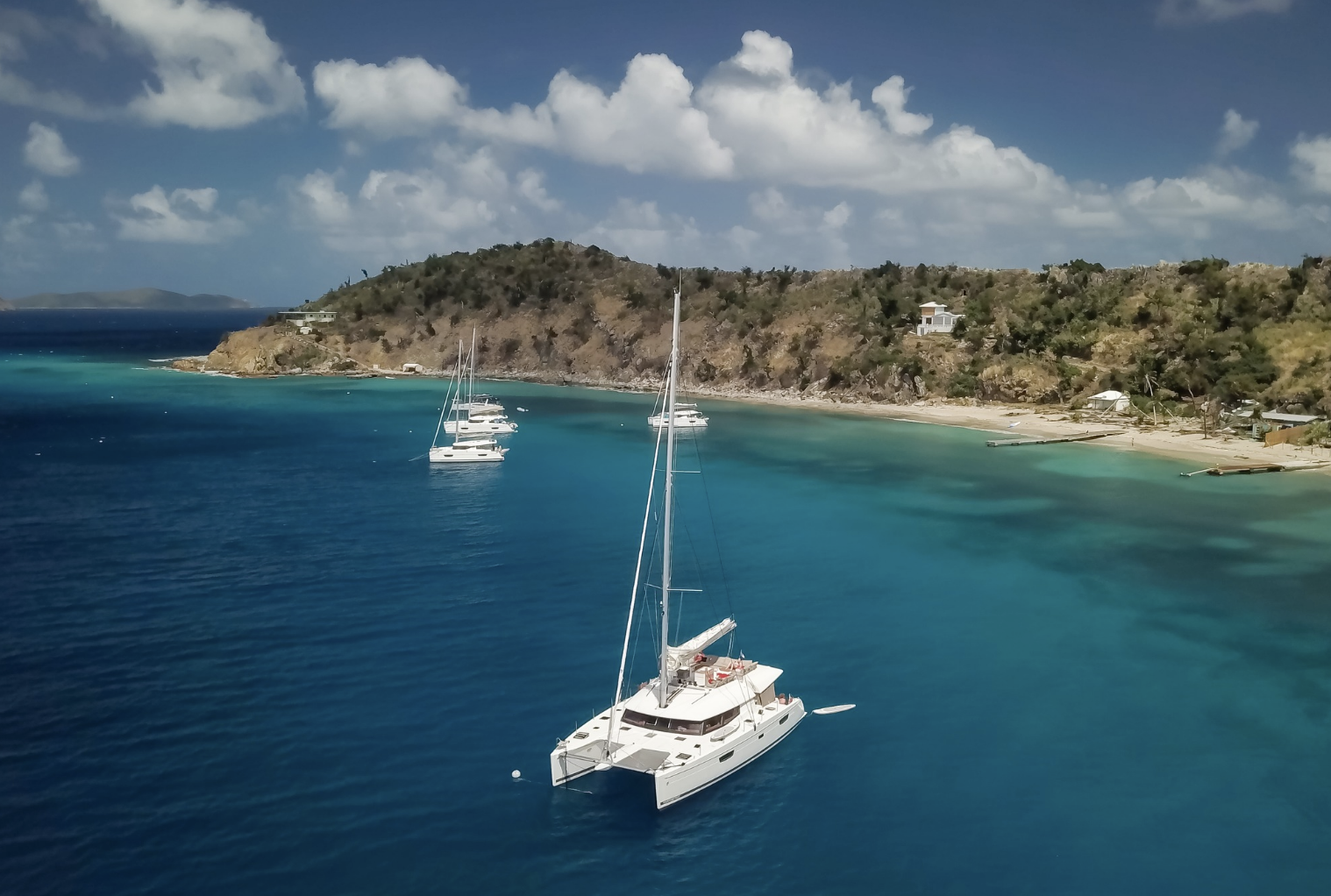
Best Time to Sail the BVI
Why February is our pick for dry skies, steady wind, and warm water.

What's Included
Here's what your cabin price covers, and what you'll budget on the side.
