Flotilla Holidays for Beginners: Do You Need a License?
It depends on the kind of flotilla. On a skipper-your-own flotilla, someone on your boat usually needs a recognized sailing qualification, or you pay to hire a skipper. On a hosted flotilla like Share the Sail, a professional captain runs every boat, so complete beginners need no license and no sailing experience at all.
Share the Sail is a hosted, by-the-cabin catamaran flotilla program from Latitudes & Attitudes Magazine, and plenty of our guests show up as total beginners. The confusion is understandable. Search "flotilla holidays for beginners" and you'll find a lot of pages that cheerfully say beginners are welcome, and then, a few scrolls down, mention that the person in charge of your yacht needs a skipper certificate and a radio license. Let's untangle it.
What are the two kinds of flotilla holidays?
There are two: skipper-your-own flotillas, where you charter and sail a whole yacht, and hosted flotillas, where you book a cabin and a professional captain sails. Either way, it's a group of boats sailing the same route together.
| Skipper-your-own flotilla | Hosted flotilla (by the cabin) | |
|---|---|---|
| What you book | A whole yacht for your group | A private cabin on a crewed catamaran |
| Who sails your boat | You, or a skipper you hire | A professional captain |
| License or experience | Usually required for the skipper | None |
| Who's on your boat | The friends or family you bring | You plus a few matched guests |
| Best for | Sailors building experience with a safety net | Beginners, solo travelers, and anyone who'd rather not drive |
Both are real flotillas, and both are a blast. They're just built for different people. We cover the bigger picture in what a flotilla holiday is, hosted vs skipper-your-own.
What license do you need for a skipper-your-own flotilla?
Usually a recognized skipper qualification in the Mediterranean, or a solid sailing resume in the Caribbean. It varies by country and by charter company, so always check the specific trip. Broadly speaking:
- In much of the Mediterranean, including Croatia and Greece, the skipper usually needs a recognized qualification such as an ICC or an RYA Day Skipper certificate (or an equivalent), and often a VHF radio certificate too.
- In the Caribbean, including the BVI, charter companies typically look at your sailing resume and experience rather than a government license.
- US sailors often use ASA or US Sailing bareboat certifications to show they know what they're doing.
If nobody in your group has the paperwork, most skipper-your-own operators will rent you a skipper for the week. That works, but at that point you're paying for a captain anyway, and you're still responsible for planning meals, provisioning, and filling the boat with your own people.

Can a complete beginner go on a flotilla holiday?
Yes. On a hosted flotilla, you don't need to know port from starboard. (Left and right. You're welcome.) Many of our guests have never sailed before, or have only been out once or twice, and the average guest is around 35 to 60. Nobody expects you to show up with a logbook.
On a skipper-your-own flotilla, a beginner can come along as crew if someone else on the boat is qualified, or if the group hires a skipper. What a beginner usually can't do is take charge of the yacht.
What does a beginner actually do on board?
As much or as little as you want. That's not a slogan, it's a policy.
If you're curious, the captain is happy to show you how to trim a sail, take the helm for a stretch, tie a bowline, or read the wind. Our guests also tend to pick up these important life skills:
- What all those ropes actually do (they're called lines, which you'll learn on day one)
- Dinghy driving 101
- How to spot a sea turtle before anyone else and get loudly excited about it
- The correct amount of time to lie on the trampoline after lunch (more than you'd think)
If you'd rather read, swim, and nap, that's completely fine. There's zero pressure to "do" anything. More on this in why you don't need sailing experience.
Is a catamaran easier for beginners than a monohull?
For guests, generally yes. A catamaran has two hulls, which makes it wide, stable, and much less tippy than a traditional sailboat. It doesn't lean hard to one side under sail, so your coffee stays in the mug and walking around the deck feels normal. There's also a lot more open space to spread out.
Seasickness is less common on a catamaran, though nobody can promise it won't happen. Pack a remedy just in case. Our catamaran packing list has the details.
Is a hosted flotilla the same as a sailing course?
No, and it helps to know which one you're shopping for. A sailing course is about earning a certification. You'll follow a syllabus (ASA 101, 103, and 104 in the US, or RYA Competent Crew and Day Skipper in the UK system, for example), and you'll be graded on what you can do. It's great, and it's also homework.
A hosted flotilla is a vacation. You'll probably learn more than you expect, because it's hard to spend a week on a sailboat without picking up a few things. But nobody is testing you, and you don't come home with a certificate. If you get hooked (it happens), a week with us is a pretty fun way to find out before you sign up for a course. Plenty of people take a class later because a captain let them steer for an afternoon and something clicked.
What does a flotilla day look like for a first-timer?
Short sails, long swims, and evenings with the fleet. Roughly:
- Morning: coffee, a swim, breakfast on board.
- Late morning: the boats sail to the next anchorage, usually a short hop. You help or you supervise.
- Afternoon: snorkeling, a beach, maybe a hike or a town to wander.
- Evening: the fleet anchors in the same area. Sometimes the boats raft up together for sundowners. Sometimes you dinghy over to another boat for dessert, or everyone heads ashore for dinner.
The captain handles the navigation, anchoring, weather, and dinghy runs. Your main job is deciding between the beach and a nap.
How do you choose a beginner-friendly flotilla?
Look for a professional captain on every boat, a private cabin and bathroom, and a clear answer on who else will be on your boat. A few questions sort it out quickly:
- Is there a professional captain on every boat? If not, who's the skipper?
- Do I book a cabin or a whole boat? If it's a whole boat, you need to fill it.
- Will I have my own cabin and bathroom? Especially important for solo travelers. Here's whether solo travelers have to share a cabin.
- Who else will be on my boat? Ask how they place guests. We match by personality and preferences, explained in how we match guests to boats.
- What's included? Meals, drinks, and shared boat costs vary a lot between companies. Here's what's included in your cabin price with us.
- What's the age range and vibe? A beginner-friendly party week and a beginner-friendly relaxed week are very different weeks.
Which 2027 flotillas are good for beginners?
All of ours, because every boat has a captain. Pick by the scenery and the season:
- British Virgin Islands flotilla, February 20 to 27. Short sails, protected water, and a classic first trip.
- Seychelles sailing trip, May 22 to 29, from Praslin. Remote, beautiful, and surprisingly easygoing.
- Croatia sailing week, August 28 to September 4, a loop from Split. Island towns and coves, without the party-week energy.
- Tahiti sailing trip, November 6 to 13, a loop from Raiatea. Lagoon sailing at a relaxed pace.
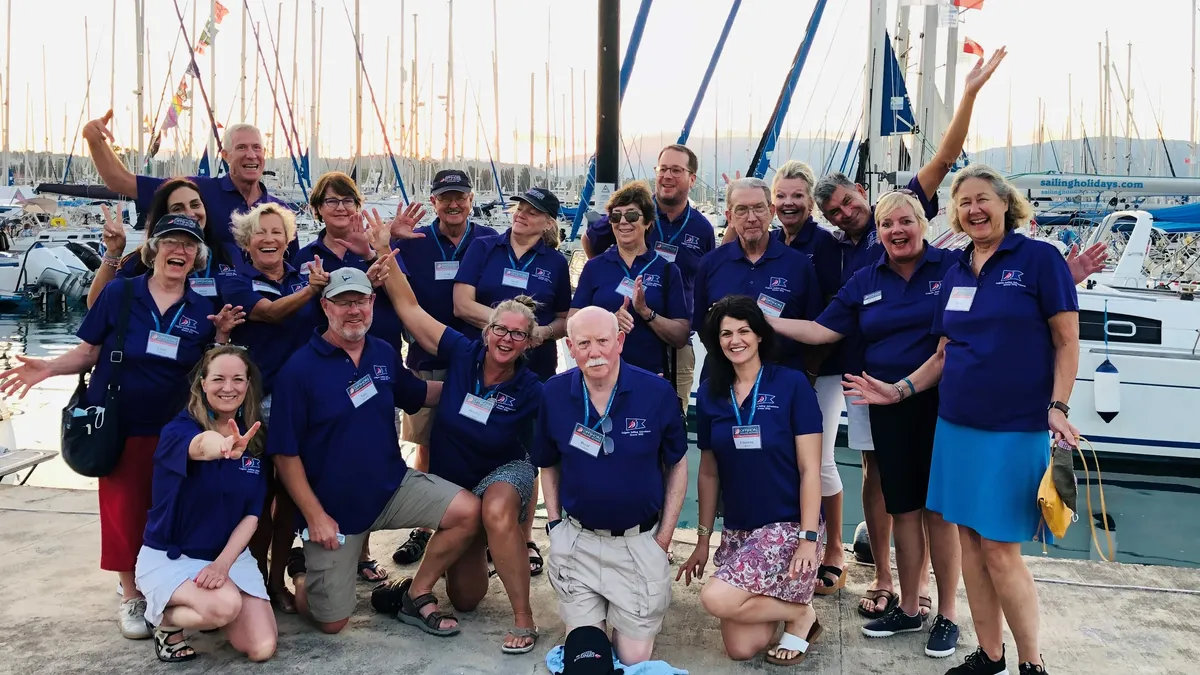
Still deciding whether this kind of trip is for you? Read what a by-the-cabin sailing vacation is, then come sail with people who were also nervous beginners once. Share the Sail comes from the crew behind Latitudes & Attitudes, who have been getting new people into the cruising life for years, and this is the easiest on-ramp we know. Strangers on day one. Crew for life.
Keep Reading

What Is a Flotilla, Anyways?
A group of boats sailing the same route, with plenty of room to do your own thing.
No Sailing Experience Needed
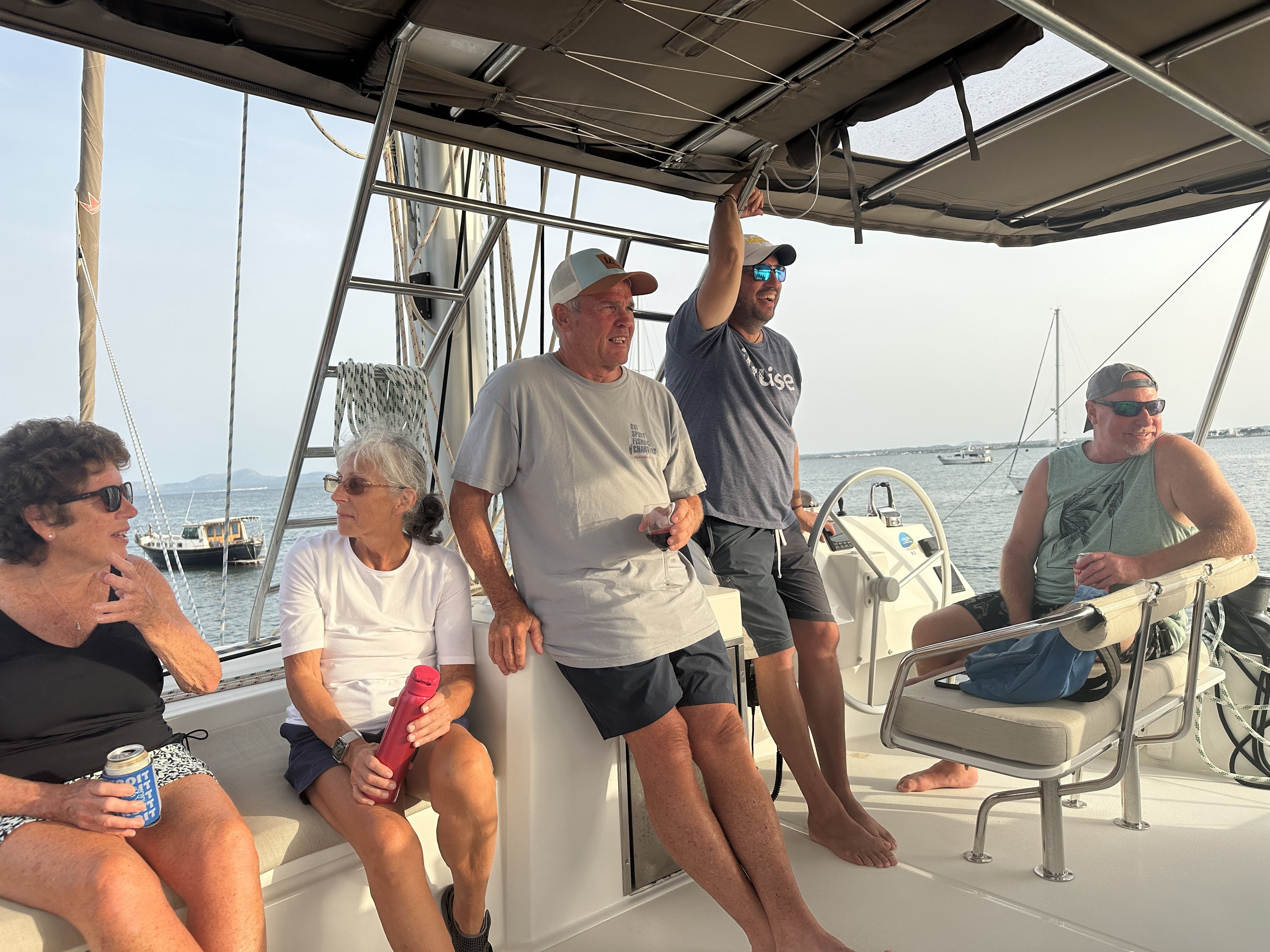
A captain runs the boat. You can learn the ropes, or just enjoy the ride.

What to Pack for a Catamaran Sailing Vacation
Soft bag, lots of swimsuits, three pairs of shoes, tops.
What Is a By-the-Cabin Sailing Vacation?
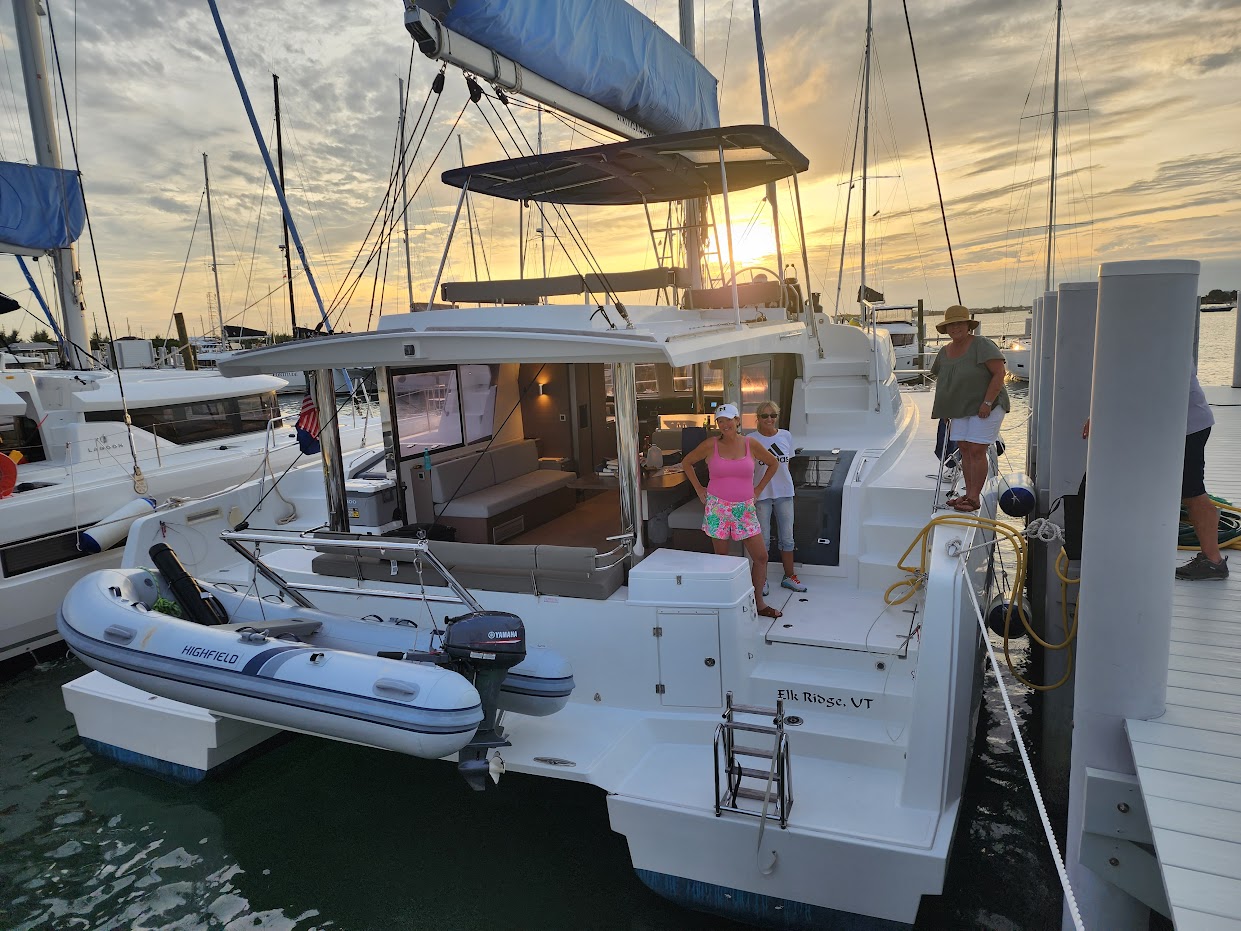
Book one cabin, not the whole yacht. Here’s how cabin charters work.
