Can You Get Seasick on a Catamaran? What to Expect
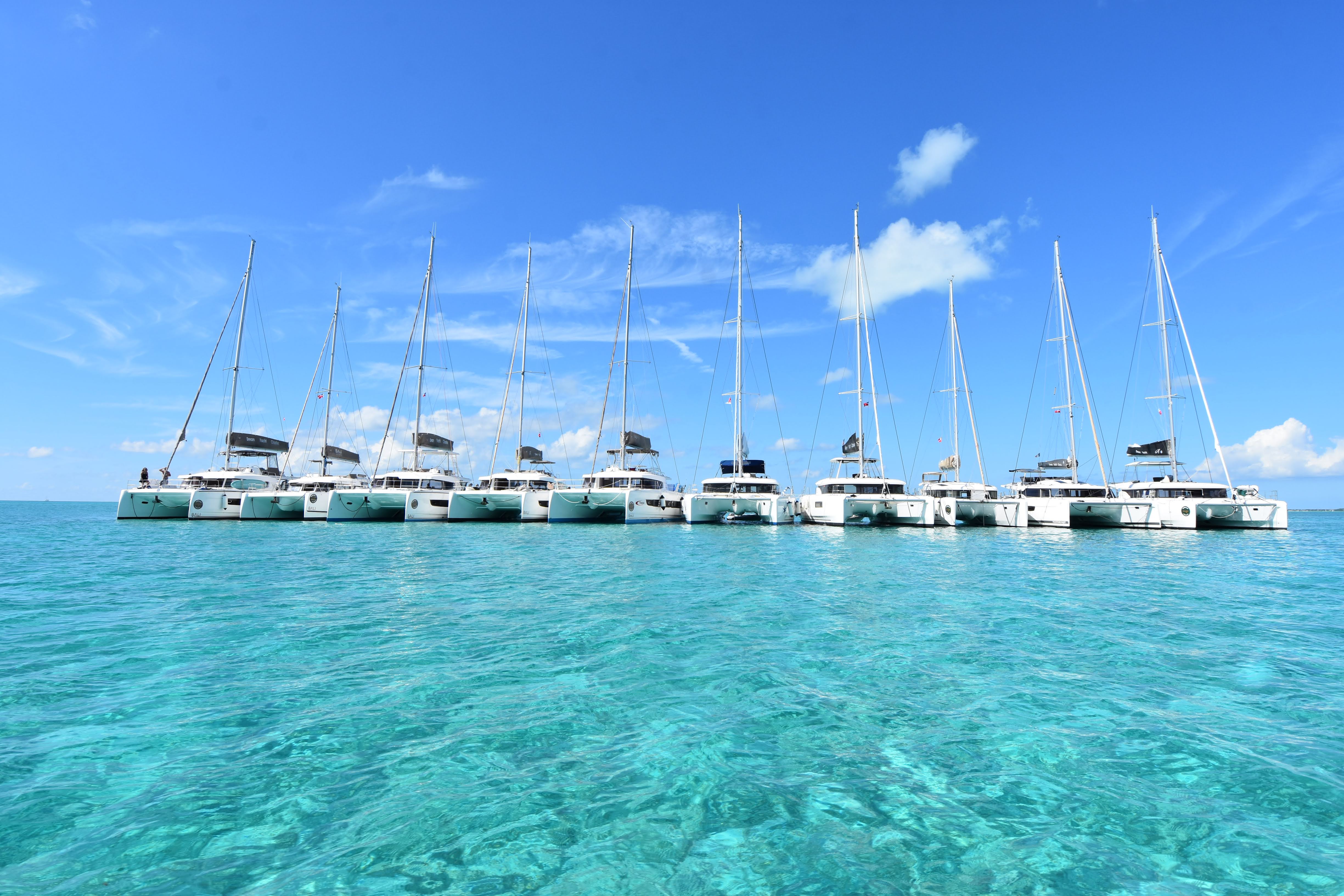
Yes, you can get seasick on a catamaran, but most people are less likely to than on a traditional single-hull sailboat. Two hulls keep the boat level instead of heeled over, it rolls far less, and it sits steady at anchor. Short, choppy seas can still make it bouncy, so bring a remedy you've already tested.
Share the Sail is a hosted, by-the-cabin catamaran flotilla program from Latitudes & Attitudes Magazine. "Will I get seasick?" is the second most common question we get from first-timers, right after "do I have to know how to sail?" (You don't.) It usually arrives with a story about a ferry, a fishing charter, or a whale-watching trip that went sideways in 1998. Fair enough. Here's the honest version, from people who have spent a lot of weeks watching guests turn a little green and then, about an hour later, cannonball off the back of the boat.
Are you less likely to get seasick on a catamaran?
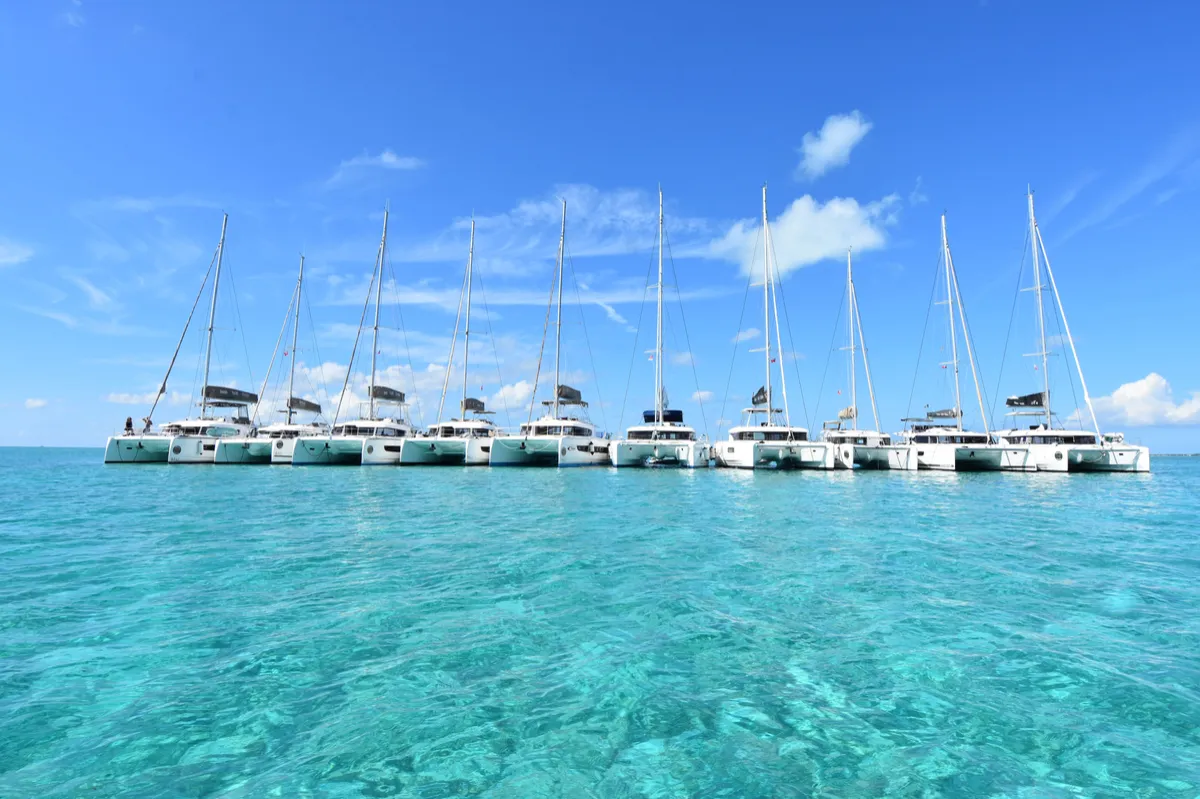
Usually, yes. A catamaran barely heels and rolls through a much smaller angle than a monohull, and that slow side-to-side roll is what gets most people. It's a big improvement, not a force field.
On a monohull, the boat leans over when the wind fills the sails, and at anchor it can rock back and forth in a leftover swell like a very committed metronome. A catamaran sits on two hulls spread wide apart, so it stays mostly flat under sail and at anchor. Your coffee stays on the table. Your sunglasses stay on the counter. You stay upright without bracing a knee against anything.
The other underrated perk is the main cabin, which sailors call the saloon. On a catamaran it's on deck level with windows all around, so even when you duck inside for a snack, you can still see the horizon. That matters more than you'd think, because a lot of seasickness comes from your eyes and your inner ear disagreeing about what's going on.
What does a catamaran's motion actually feel like?
Flatter and quicker. Instead of a long, lazy roll, a catamaran tends to bob and bounce, and in short, steep chop the two hulls can move a little out of sync, which gives a corkscrew feel some people notice.
Think of a monohull as a rocking chair and a catamaran as a car on a gravel road. People who grew up on powerboats tend to love catamarans. People who get queasy in the back seat of a car may need a day to adjust. In calm water, which is most of what you'll sail in on a hosted week, it mostly feels like a very slow, very scenic floating patio.
One spot to know about: the trampoline net at the front of the boat. In flat water it's the best seat in the house. In chop it's the bounciest seat in the house, and it gets splashy. Save it for the anchorage.
Where should you sit on a catamaran if you feel queasy?
In the cockpit, toward the back and middle of the boat, with fresh air on your face and your eyes on the horizon. The bow and your cabin below deck are the worst seats when it's bumpy.
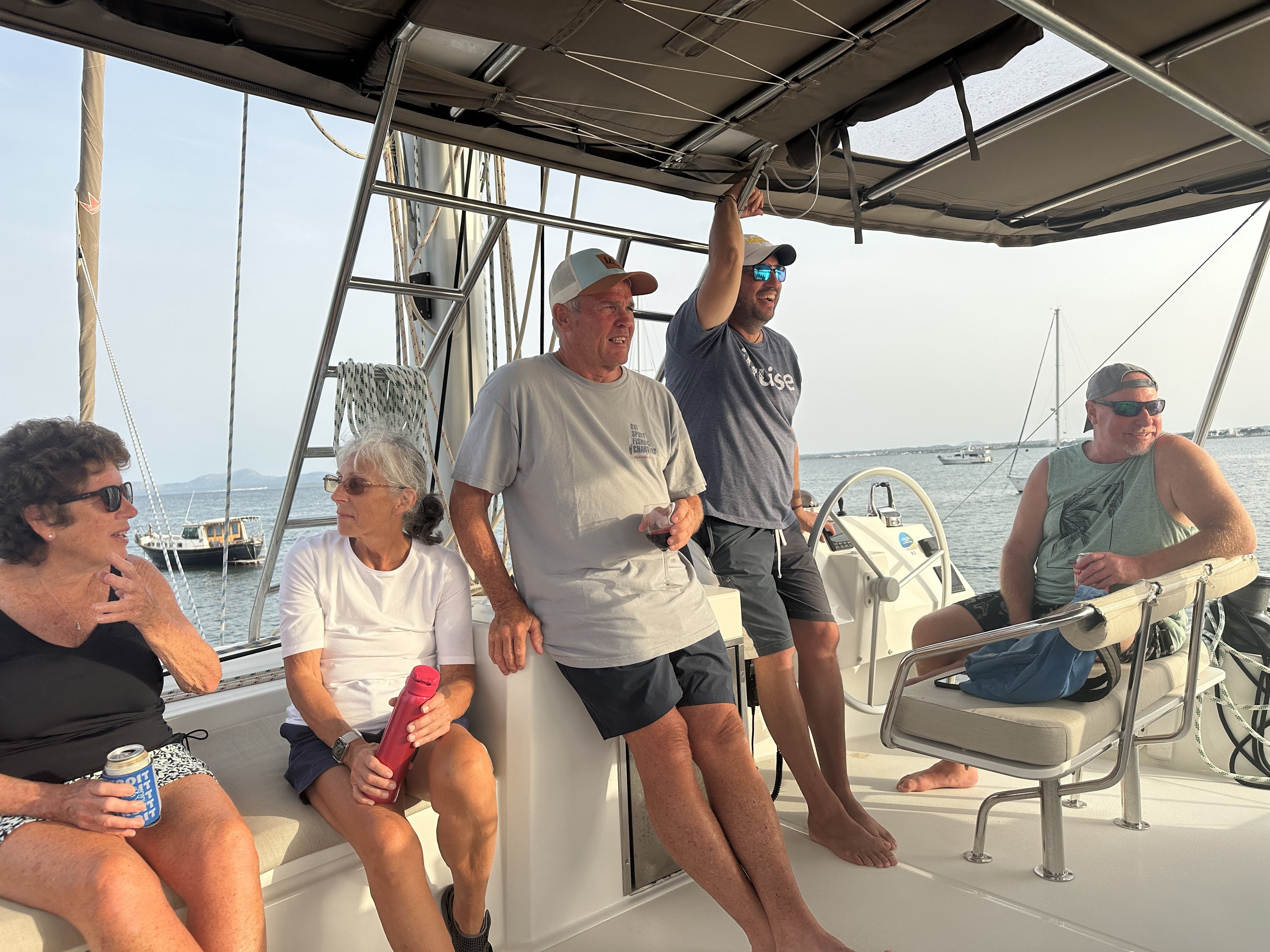
The cockpit is the covered outdoor area at the back of the boat, near the helm, and it moves the least. Pick a spot facing forward, look at a fixed point on land or the horizon, and let the breeze do its thing. If you're curious, ask the captain if you can take the wheel for a while. Drivers almost never get carsick, and the same trick works on boats. Bonus: you get to tell people at home you sailed a catamaran, which is technically true.
What to avoid: scrolling your phone, reading, and going below to dig through your bag for sunscreen while the boat is moving. Pack your day bag before you leave the anchorage so it's within reach.
How much time do you actually spend sailing?
Less than most people expect. On a typical Share the Sail week, the boats sail a few hours on most days, then spend afternoons and nights at anchor or on a mooring, where a catamaran sits steady.
The destinations help, too. In the British Virgin Islands, most hops are short and the islands ring a fairly sheltered channel. In Croatia, the 7-day route from Split moves between islands that are roughly 10 to 20 nautical miles apart. In Tahiti, Raiatea and Taha'a share one lagoon protected by a reef, so a lot of that sailing is in calm water. The crossing to Bora Bora is open ocean, and that's the leg to take your remedy for. More in our Tahiti cabin charter guide. In the Seychelles, Praslin, Curieuse, and La Digue sit a short sail apart, and our May week falls in the calm changeover between the two monsoons.
The captain also picks the timing. If the wind is up in the afternoon, the boats may leave early in the morning. If a crossing looks lumpy, the plan can shift a day. The itinerary is the plan, not a promise, and your stomach will be glad about that.
What helps prevent seasickness on a sailing trip?
Ask your doctor or pharmacist which remedy suits you, try it at home first, and take it before you need it, not after. On board, eat light, drink water, stay in fresh air, and watch the horizon.
We're a sailing company, not a medical one, so we won't tell you what to take. What we can tell you is what we've seen work for guests:
- Test your remedy at home. Some options make people drowsy. Better to learn that on your couch than halfway to Bora Bora.
- Start early. Most remedies work best as prevention. Once you feel awful, you're playing catch-up.
- Sleep. Arrive a day early so you're not stepping aboard after a red-eye and two connections. Tired brains get seasick more easily.
- Eat something plain. Crackers, toast, a banana. An empty stomach and a greasy breakfast are both bad ideas.
- Pace the drinks. The welcome rum punch can wait until the anchor is down. It'll taste better then anyway.
- Pack it where you can find it. Wristbands, ginger chews, whatever your plan is. Our catamaran packing list has a spot for it.
What if you get seasick anyway?
Tell the captain early, move to the back of the boat in fresh air, and fix your eyes on the horizon. Most queasiness fades once the boat is anchored, and many people adjust after the first day or two.
Nobody on the boat will judge you. Your captain has seen it all, including a guest who was fine through a squall and then got queasy watching someone else eat a tuna sandwich. Speak up instead of quietly suffering below deck, which is the single worst place to be. The captain can adjust course, slow down, or keep you company with some very bad jokes.
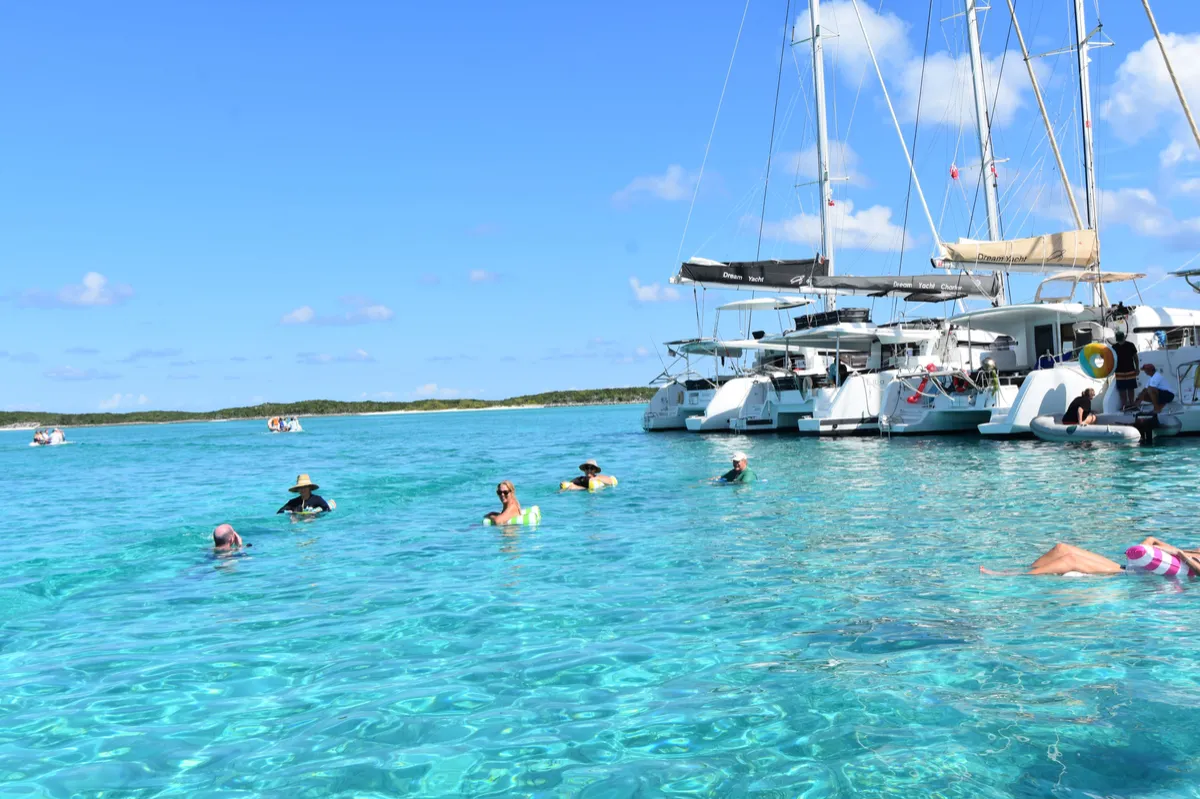
Once the anchor drops, get in the water. Floating in a calm, clear bay resets most people faster than anything else. And if you feel like the ground is gently rocking for a day after you get home, that's normal. Sailors call it "dock rock," and it usually wears off on its own.
Should seasickness stop you from booking a sailing vacation?
For most people, no. If you've handled ferries, snorkel boats, or a harbor cruise fine, a catamaran in sheltered island waters is a reasonable bet. If every boat you've ever met has made you sick, talk to your doctor first.
You also don't have to know a thing about sailing. A professional captain runs every boat, and you can help with the lines or just supervise from a cushion. Read do you need sailing experience for a sailing vacation and flotilla holidays for beginners if you're still on the fence. We also match guests to boats by personality, so you won't be stuck with a crew that thinks a 6 a.m. open-water crossing is a fun surprise.
Ready to test your sea legs? Our 2027 weeks sail the British Virgin Islands in February, the Seychelles in May, Croatia in late August, and Tahiti in November. Pick one, pack the ginger chews, and we'll save you a seat in the cockpit.
Keep Reading
No Sailing Experience Needed
A captain runs the boat. You can learn the ropes, or just enjoy the ride.

Flotilla Holidays for Beginners
Do you need a license? Not on a hosted flotilla. Here’s the difference.

What to Pack for a Catamaran Sailing Vacation
Soft bag, lots of swimsuits, three pairs of shoes, tops.

Croatia Sailing Itinerary: 7 Days from Split
Brač, Hvar, the Pakleni Islands, and Šolta, stop by stop.
